
5 Lesser-Known Benefits of Learning a Foreign Language in School
When parents think about foreign language lessons, the familiar advantages often come to mind: travel, communication, academic success, and future careers. Those are useful, but they do not tell the whole story. In school, foreign language learning can shape how children listen, take risks, and understand themselves.
This is especially advantageous in international schools in Singapore, where students often meet classmates with different accents, routines, and family stories. At The Perse School (Singapore), the current language suite includes Mandarin, French, and Japanese. From August 2026, this provision will expand to include Spanish*, German*, Korean*, and Hindi*. This growing choice gives students more ways to connect language with identity, human relationships, and their education journey.
1. Learning a foreign language teaches children to think with greater precision
Children quickly discover that a word in one language does not always match neatly with a word in another. That small surprise is valuable. It trains them to look more carefully at meaning, context, and tone.
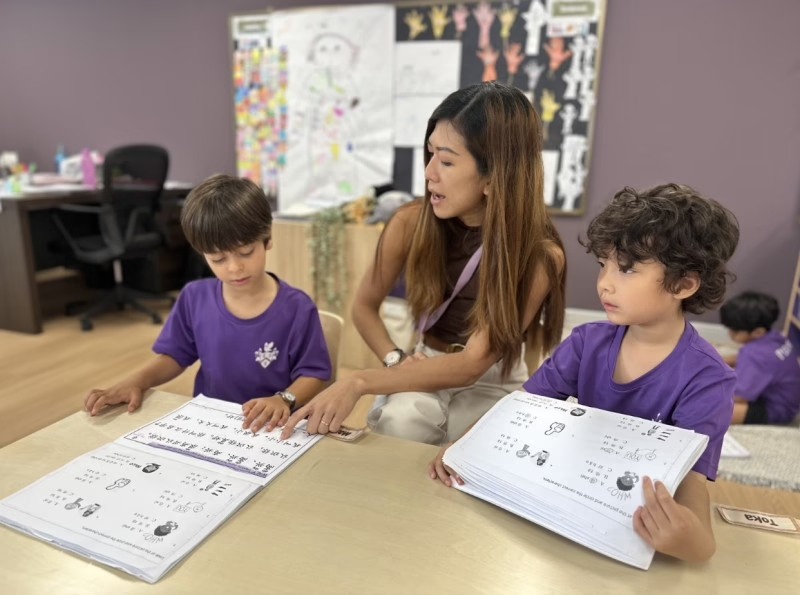
In Early Years, this can begin in a play-based environment, through songs, stories, games, and simple classroom routines. Students are not just memorising words. They are noticing patterns. They begin to ask, “Why do we say it this way?” That question can support sharper thinking across reading, writing, and speaking.
This precision also helps children become less rushed in how they communicate. They learn that the right word matters. They also learn that meaning can depend on gestures, expressions, and situations.
Over time, this habit can support other subjects too. A student who thinks carefully about wording may also become more exact when explaining a mathematics strategy, interpreting a story, or giving reasons in a class discussion.
2. Learning a foreign language gives pupils a safer way to practise being brave

Learning a foreign language gives students permission to be beginners. In many subjects, children may worry about getting the answer wrong. In a language lesson, mistakes are expected. They are part of the process.
This creates a useful kind of courage. Students practise unfamiliar sounds, try new sentence patterns, and speak even when they are not fully sure. By the time they reach Primary School, that habit can support classroom participation in wider ways.
The hidden benefit is resilience. Children learn that feeling awkward is not a reason to stop. It is often the first step towards growth.
Because everyone is learning together, the classroom can feel less performative. A mispronounced word becomes something to practise, not something to hide. That can be especially helpful for quieter children who need time to build confidence.
3. Learning a foreign language strengthens respect for a child’s first language and identity
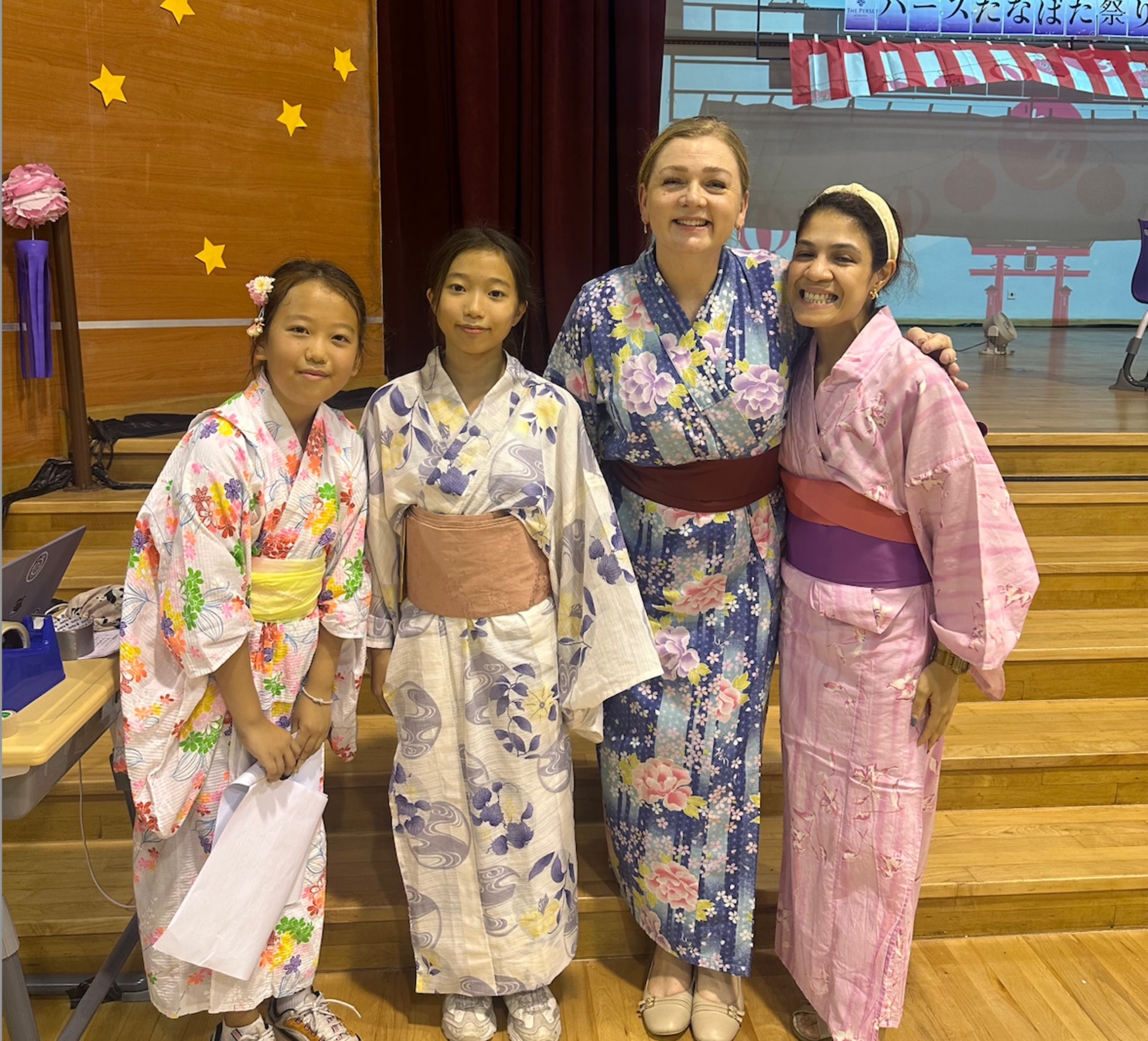
When pupils compare a new language with their mother tongue, they often begin to value both more deeply. They may notice how their family uses certain phrases, how relatives switch between languages, or how meaning changes from one setting to another.
For internationally mobile families, this can be a grounding experience. A child might speak one language at home, another in class, and hear several more among friends. Rather than seeing this as confusing, foreign language learning helps students see it as a strength.
It can also make home conversations richer. Children may ask grandparents about words, sayings, or cultural memories. They may become more curious about where their family language comes from. In this way, learning another language can support belonging, not replace it.
4. Learning a foreign language improves how students read people, not just words
Learning a foreign language asks students to notice more than vocabulary. They pay attention to pauses, facial expressions, politeness, formality, and the small choices people make when they speak.
In a diverse international school such as The Perse School (Singapore), this is a daily life skill. A student who learns to listen carefully in one language lesson may become more patient in group work, more thoughtful during disagreements, and more aware of how classmates experience the same situation differently.
Inquiry-led learning can deepen this benefit. Instead of only asking “What does this word mean?”, students can ask “When would someone use this?” or “What does this show about the culture?” These questions build social awareness. They help students become better interpreters of people.
These are subtle skills, but they matter in friendships and in the workplace. They also matter when students collaborate with classmates who may not always express ideas in the same way.
5. It makes future academic choices feel less intimidating
Language learning can quietly prepare students for more formal study later on. Over time, they become used to grammar, revision, listening practice, oral work, and written expression. These habits can make future course choices feel more manageable.
In Senior School, students who have built confidence over several years may approach IGCSE options with a stronger sense of readiness. Later, that same foundation can support A Level thinking, where independence and accuracy become even more important.
This does not mean every child must become fluent in several languages. The deeper benefit is that they learn how steady practice works. They see progress build slowly, through repetition, feedback, and curiosity.
That is useful even for students who later choose different subjects. Language learning teaches them to break complex skills into smaller steps, accept feedback, and keep improving.
A thoughtful foreign language programme is not only about vocabulary lists, exams, or travel phrases. Its deeper value is in the habits it builds — courage, patience, flexibility, and care with words.
For students, these benefits can last far beyond the language classroom. They learn how to listen before judging. They learn how to try before they feel ready. Most importantly, they learn that there is always more than one way to see, say, and understand the world.
*Language offerings are subject to demand.